1st January 2026
Someone, Not Something: Go Vegan World’s New Year Campaign 2026
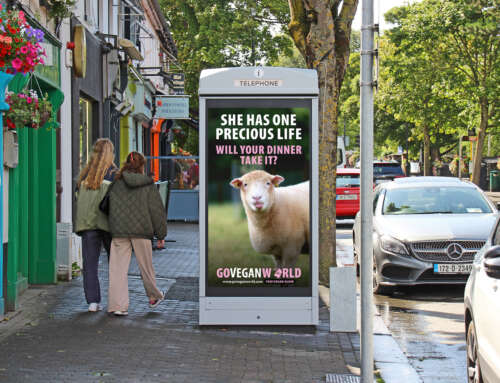
Our New Year 2026 campaign features a very simple ad that shows a sheep’s face alongside the words ‘Someone, Not Something’. The ad zooms in on the features (eyes, ears, nose, and mouth) he has in common with us. It is these features and senses, combined with our brains, that we all (human and non-human) use to feel and experience the world. When you look at someone’s eyes, you see who they are and you also see their experience of you reflected back at you. There is a very significant difference between looking at the eyes of someone who has died or the eyes of an inanimate toy, and looking into the eyes of someone who sees you, someone who can feel and experience their world. This is a very simple ad that reminds people that the animals we use for food, clothing, entertainment, research and labour are feeling beings, like us, who value their lives and it is wrong of us to use them.
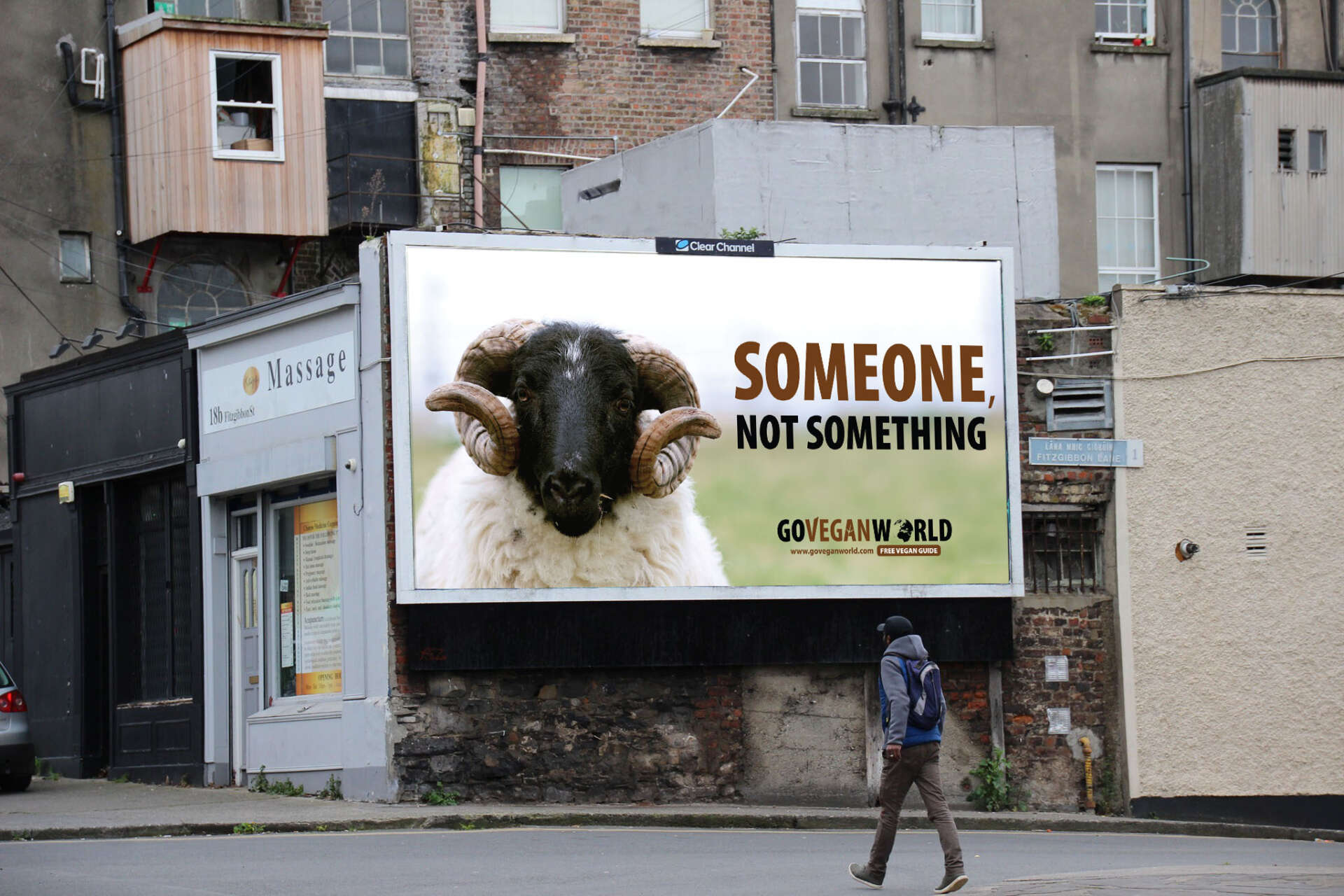
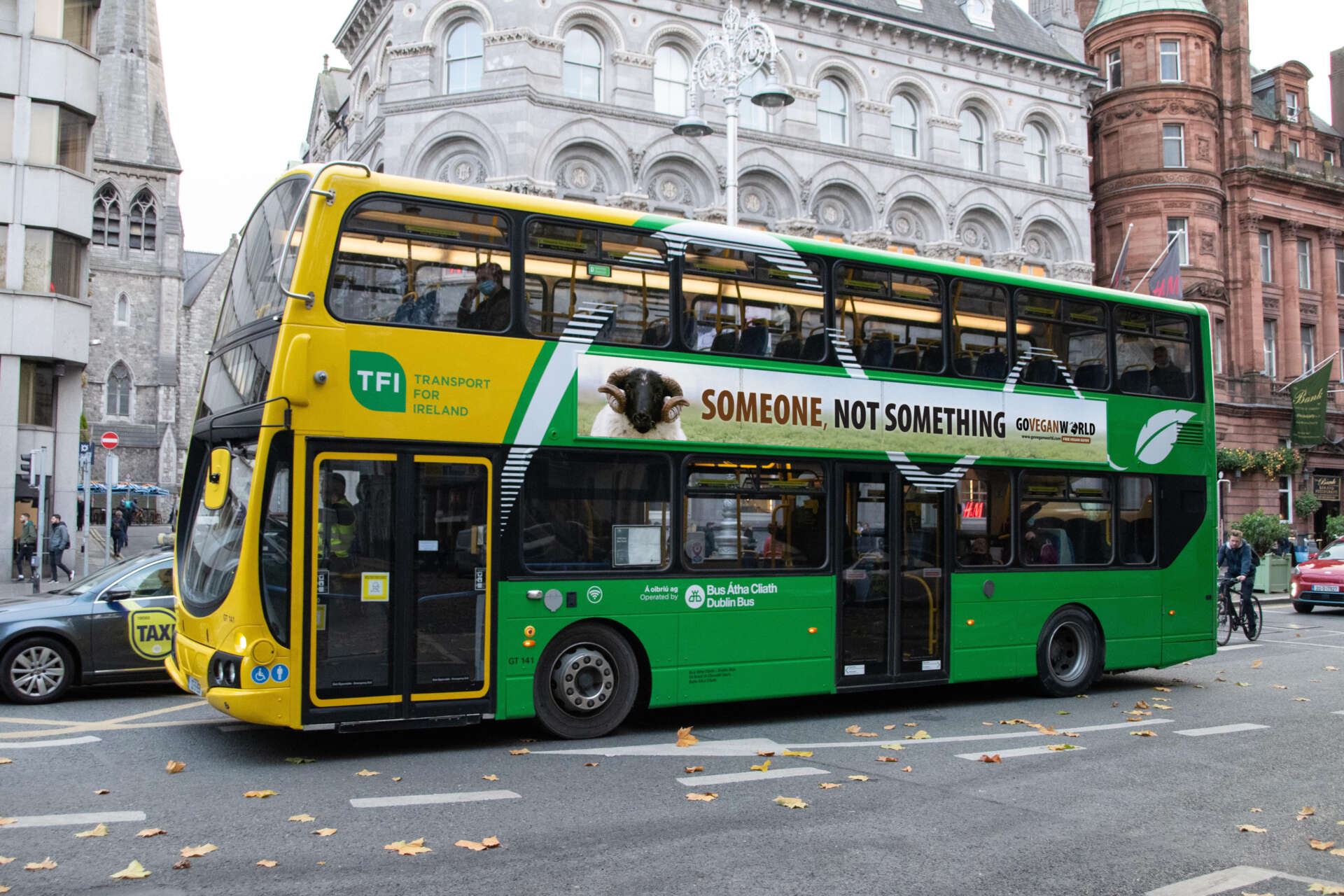
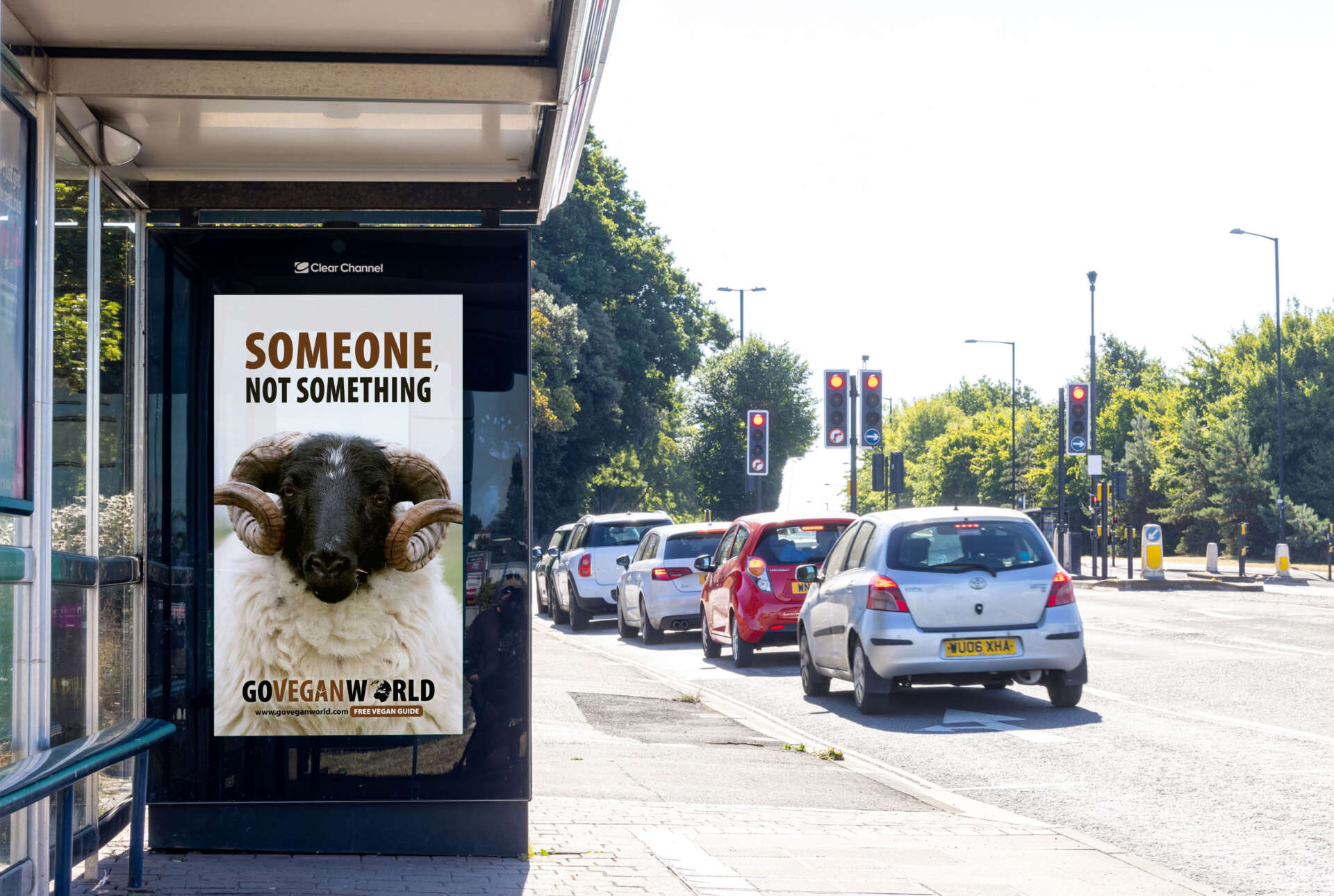
What is our motivation in using such a simple ad? We believe that one of the most serious omissions in vegan advocacy is the loss of the animals themselves and with it, the rationale for veganism. The animals on whose behalf and rights we advocate have become lost and forgotten amidst the plethora of products hitting the shop shelves or the latest vegan recipe or restaurant option. We believe we need to bring them to the forefront so that people are prompted to recognise that going vegan is a radical act of recognition of other animals as equal, feeling beings who share our fundamental rights not to be owned, harmed, used as commodities, or killed. Once this is understood, the behavioural change that characterises how vegans live, follows very easily.
Too often the focus in vegan activism is on the end stage of behaviour change (e.g. what do I eat when I eliminate animal products from my diet; what personal care products can I use that have not been tested on other animals; where can I bring the children to entertain them instead of visiting the zoo?), without sufficient attention to the preliminary and necessary changes in how we think about, feel towards and understand the animals whose use we are about to abolish from our lives. Veganism is the manifestation of the conviction that it is wrong to use other animals as commodities on the grounds that they are feeling beings with rights. Without providing this context, we are setting aspiring vegans up for failure because one cannot be vegan in the absence of understanding how and why other animals are harmed when we are not vegan, and without considering what it is other animals need from us so the rights that matter to them are respected. This education provides the necessary meaning, motivation and goal that ensures that people actually go vegan and do not simply go vegetarian and eliminate some forms of animal use instead of all animal use, or adopt a plant-based diet, or become animal welfarists who fool themselves that animal products from ‘free range’ or ‘organic systems’ are ethical, and perpetuate the notion that it is acceptable to use other animals as long as we treat them ‘kindly’ or kill them in less painful ways.
Veganism has become sadly misrepresented in recent years, in a manner that has done a great disservice to the animals it claims to help. It has been portrayed to the public as a diet or trendy lifestyle, something that can be ‘tried out’ and dropped at a whim, rather than a social justice issue that strikes at the very heart of inequality, exploitation and violence.
When you think of other social justice issues – women’s rights, the civil rights movement, food insecurity and world hunger, climate change, environmental destruction, the plight of refugees, LGBTQ+ rights, war etc, would you consider advocating for them using the same tactics that the ‘vegan’ or ‘animal’ movement has used? Would you, for a start, almost completely eliminate the victims from your advocacy efforts? Would you advocate that we reduce rather than eliminate racism in the way that reducetarians advocate for consuming less animal products rather than respecting their rights and ending all use of other animals? Would you recommend encouraging people to ‘try out’ being anti-racist, or engage in a ’31 day challenge’ to end gender violence? Just as the animal rights movement calls for a boycott on all animal use and all animal products, the anti-slavery movement advocated boycotting products of slavery such as sugar. How diluted and ineffective their activism would have been if the call to abstain from sugar had been advertised as a healthy diet instead of the rights of slaves to be free? How effective would any social justice campaign be if, instead of advocating for justice and equality, it advocated reformed methods of exploitation as much of the ‘animal’ movement does with it’s call for better welfare while animals continued to be bred, used for profit and killed? No social justice issue can be successful if its advocates focus on single forms of exploitation at the expense of the greater goal of liberation and equality. So few in the ‘animal rights’ movement actually mention animal rights at all and rarely, if ever, portray the victims as the sentient beings they are. Instead they ring fence discrete forms of animal use such as ‘fur farming’, ‘factory farming’ or ‘meat eating’, thus neglecting to show that all forms of animal use are interconnected by the root cause of the problem other animals face at our hands (our supremacist, speciesist thinking). Focusing on single aspects of animal use also neglects to call for the only goal that matters: equal moral consideration of everyone regardless of species, beginning with our complete abolition of their use from our lives by being vegan.
We hope that our work goes some way to centering the animals at the heart of the animal rights movement by showcasing them as very obviously sentient beings who matter, accompanied by an uncompromising call for humans to end all use of them. It is possible to be helpful to aspiring vegans without compromising the animals we claim to be advocating for. Other social justice movements can respectfully and effectively advocate on behalf of various victims of injustice; the animal rights movement can too.
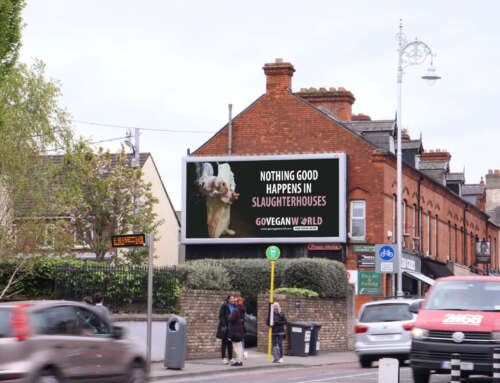
Our ads are visible on 120 buses, some large format billboards in Ireland and at over 250 sites throughout the UK including, London, Birmingham, Liverpool. Manchester, Leeds, Glasgow, Newcastle, Southampton, Portsmouth, Cambridge and Basingstoke.