August 20 2025
The Deforestation Myth
Linking the production of soy milk to deforestation is a disinformation campaign emanating from the dairy industry.
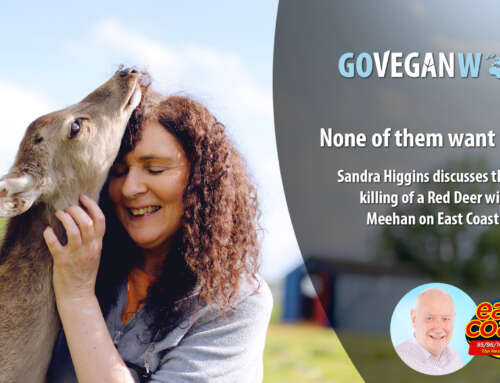
Sandra Higgins of Go Vegan World and Eden Farmed Animal Sanctuary, was recently invited to discuss a web-based article on this topic (Maya Flores, Vegoutmag, 6 August 2025) i with Declan Meehan on East Coast FM Radio. We were surprised to find that the myth conflating the consumption of soy products directly, with secondary consumption of soy fed animals and animal products by non-vegans, is still circulating. It is even more disappointing to find that a website purporting to be run by vegans, is doing the dairy industry’s dirty work for it.
Animal Agriculture is the Largest Driver of Deforestation
Let’s be very clear about the facts. The largest cause of deforestation is land clearance for the beef and dairy industry. The production of soy has increased rapidly in the last few decades and, while this has caused deforestation, in order to understand how and why this is happening, we need to examine the consumption patterns driving soy production.
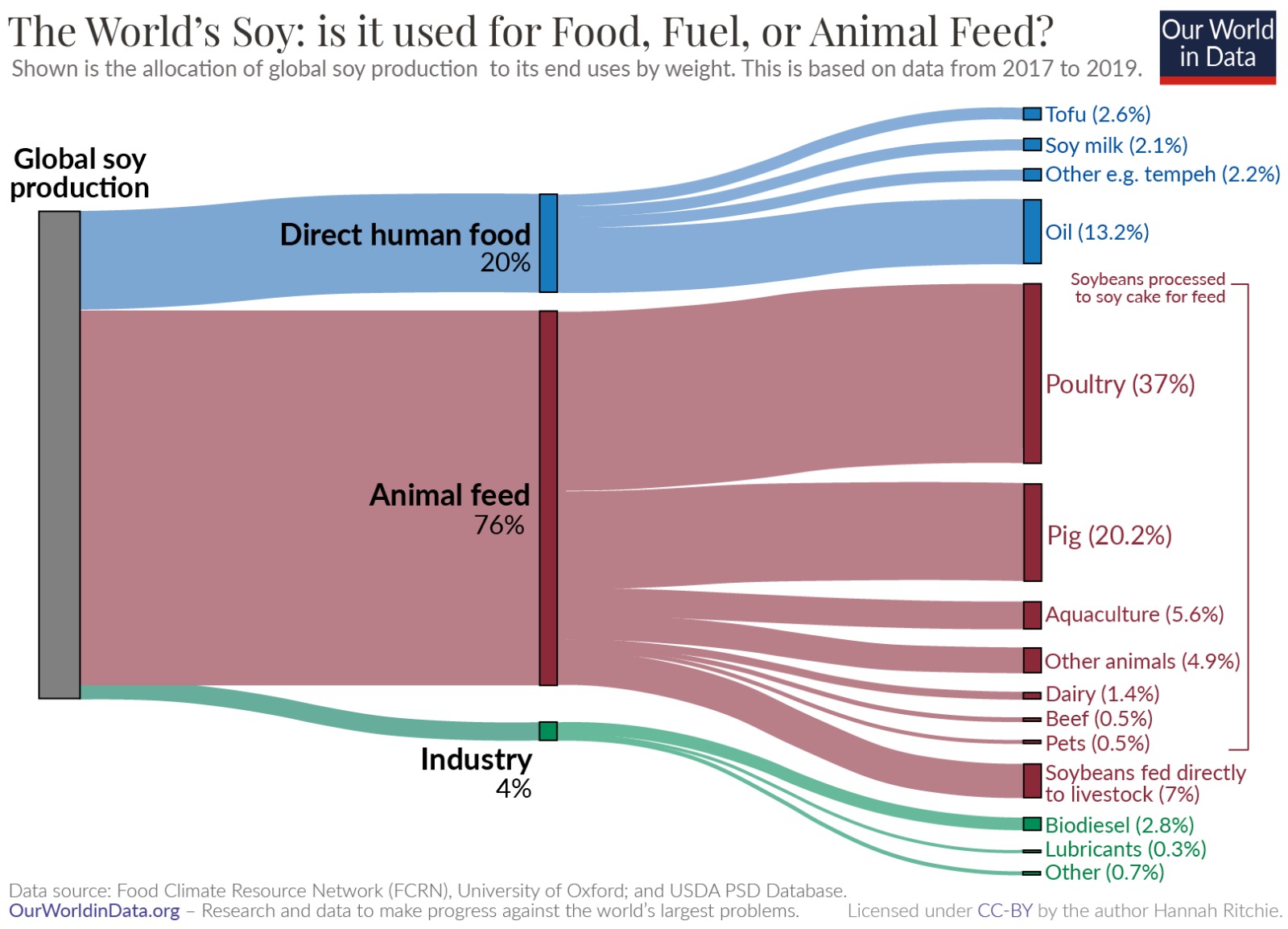
Analysis by the University of Oxford’s Food Climate Research Network in 2018 showed three categories of soy use: direct human consumption, animal food and industrial processes.
77% of global soy production and 96% of soy from the Amazon Rainforest, is fed to farmed animals. The largest amount is fed to chickens in the chicken flesh and egg industries (37%) followed by the pig industry (20.2%) and farmed fish (almost 6%). In comparison, less than 7% of global soy production is used for direct human consumption in the form of tofu, tempeh, soy milk and other soy products and it is grown primarily in the US, EU, Canada and China. Most of the soy products on Irish shop shelves are sourced from soy grown in the EU. Only 2% of soy production is used for soy milk.
The largest producers of soy are Brazil, the US and Argentina. Soy production in Brazil has grown very rapidly in the last few decades and has been at the expense of forests. This is driven by the increased demand for soy processed into animal feed to cater for the rapidly growing consumption of animal products. In comparison, the demand for human food products such as tofu and soy milk has only increased very marginally. There is no veracity whatsoever to the suggestion that deforestation is caused by direct human consumption of these very nutritious, environmentally sustainable foods. Indeed, deforestation caused by soy production is significantly less than deforestation caused by the expansion of pasture for beef production (Ritchie, 2024). ii
It is very clear that those responsible for deforestation for grazing and for soy production are the non-vegan consumers of animal flesh, fish, dairy and eggs who support the animal agriculture industries. The deliberate conflation of primary consumption of soy products with secondary consumption of animals who have been fed soy products, is a means of scapegoating vegans, blaming them for the ethical and environmental crimes of the animal agriculture industry and its customers.
The Environmental Benefits of Direct Consumption of Plant Foods including Soy
Soy is a legume and is a very sustainable, ethical source of food for direct human consumption. Like all legumes it is very nutritious, producing twice as much protein per acre than any other crop. It is also nitrogen-fixing and sequesters carbon. But it is only sustainable if it is fed directly to humans and not recycled through farmed animals whose products and bodies are consumed as food.
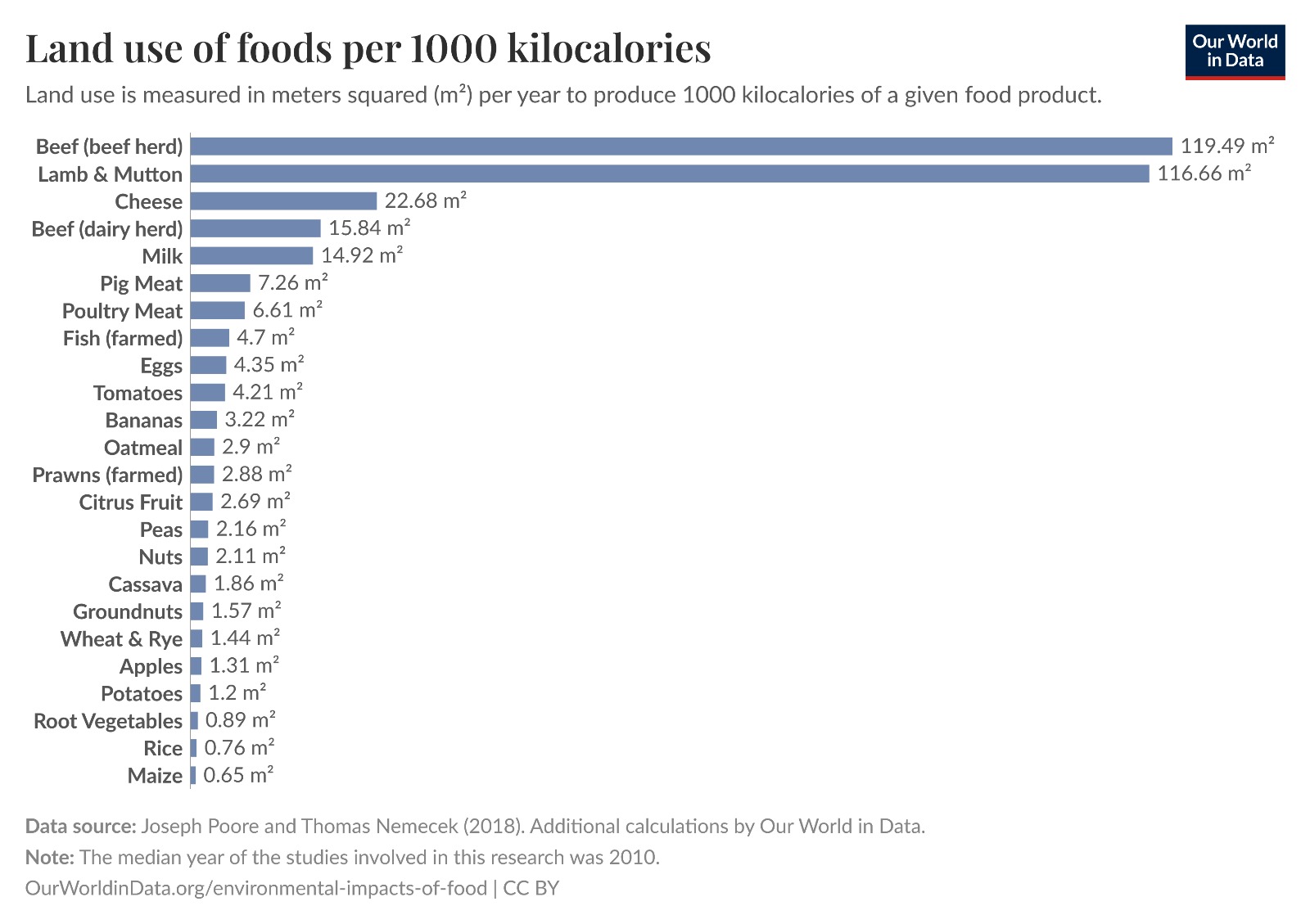
Agriculture uses half the world’s habitable land with animal agriculture using 83% of it. Yet, animal agriculture only provides 18% of our calories. Beef production uses 60% of agricultural land but only produces 2% of global calorie intake (Poore & Nemecek, 2018) iii.
It takes 50 to 100 times more land to produce a calorie of energy or a gram of protein from the flesh of lambs or cows versus plant-based alternatives such as tofu or legumes (Ritchie, H, 2021) iv. We would radically reduce our land and water use, GHG emissions, water pollution, habitat destruction, and loss of biodiversity, if we switched from consuming a diet containing animal products to a 100% plant-based, vegan, diet (Scarborough, 2023). v
Soy products are a valuable part of a human diet providing important nutrients in an ethical, sustainable manner. Significantly, the consumption of a vegan diet avoids the inexcusable crime of exploitation, harm and death to the billions of land animals and trillions of sea animals slaughtered annually to cater for the non-vegan demand for fish, flesh, eggs and dairy.
i This popular vegan milk is wiping out forests-and you’re probably buying it, Maya Flores, Vegoutmag, August 6th 2025, https://vegoutmag.com/news/z-this-popular-vegan-milk-is-wiping-out-forests-and-youre-probably-buying-it/ Accessed 18.08.2025
ii Ritchie, H (2024) Drivers of Deforestation, Our World in Data. https://ourworldindata.org/drivers-of-deforestation’Accessed 19.08.2025
iii Poore, J., & Nemecek, T. (2018). Reducing food’s environmental impacts through producers and consumers. Science, 360(6392), 987-992.
iv Hannah Ritchie (2021) “If the world adopted a plant-based diet, we would reduce global agricultural land use from 4 to 1 billion hectares” “If the world adopted a plant-based diet, we would reduce global agricultural land use from 4 to 1 billion hectares” https://ourworldindata.org/land-use-diets Accessed 20.08.2025
v Scarborough, P., Clark, M., Cobiac, L. et al. Vegans, vegetarians, fish-eaters and meat-eaters in the UK show discrepant environmental impacts. Nat Food 4, 565–574 (2023). https://doi.org/10.1038/s43016-023-00795-w